
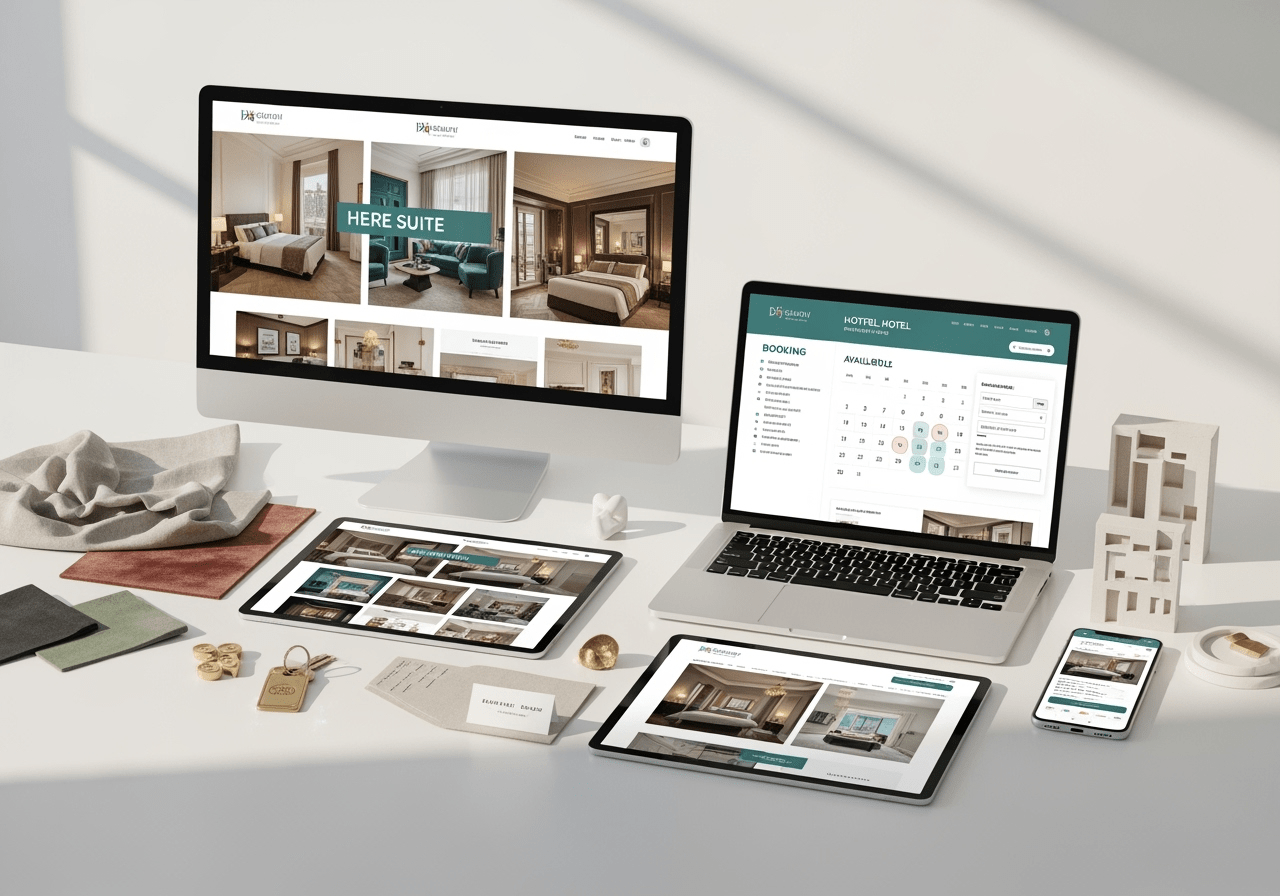

When people say “best hotel website design,” they often mean “looks amazing.” That matters—but beautiful pages that don’t book rooms are just expensive brochures. The best hotel websites balance experience and performance: fast on mobile, clear about value, and effortless to book.
What “best hotel website design” really includes
- Speed on every device: Sub‑2.5s LCP on home, rooms, and booking pages. Compressed, responsive images. Minimal blocking scripts.
- Clarity above the fold: Where you are, why stay here, and a visible “Check Availability” CTA. No guessing.
- Honest visuals: Real, well‑lit photos of rooms and spaces. Show views, bathrooms, and layouts—no tricks.
- Booking that never fights the guest: Simple calendars, transparent pricing, and the ability to edit without restarting.
Design for decisions, not decoration Great hotel sites guide a guest from curiosity to confidence:
- Above the fold: one strong image, a plain‑language value promise (location, vibe, standout amenities), one primary CTA (Check Availability).
- Rooms: truthful photography, bed type, size, view, and must‑know amenities (Wi‑Fi, parking, breakfast).
- Proof: ratings, recent reviews, awards, and press—near decision points.
- Local: neighborhood highlights, quick “things to do,” and routes—linking to rooms and offers.
Booking flow patterns that convert Ask your partner (or your hotel website developers) to demo these:
- Fast, thumb‑friendly date pickers with real‑time pricing
- Clear room comparison (photos, features, occupancy, price)
- Transparent fees and policies before checkout—no surprises on the last step
- Short forms, wallet payments, and saved progress on mobile
- Sticky “Book Now” button on mobile so action is always within reach
Performance is part of design Luxury hotel website design still has to be quick. The winning stack prioritizes:
- Lean JS and deferred non‑critical scripts
- Optimized images (modern formats, responsive sizes, lazy loading)
- Caching/CDN tuned for international travelers and peak seasons
- Accessibility by default: semantic HTML, contrast, readable type, keyboard support
SEO that beats OTAs (while helping guests) The best hotel website design is discoverable for bottom‑funnel intent:
- Pages for “hotel near [landmark]” and “boutique hotel in [city]”
- Seasonal guides and event pages that link back to rooms/offers
- Titles and meta descriptions that earn clicks without clickbait
- Helpful schema (Hotel, FAQ), clean URLs, and breadcrumbs
- Internal links that send authority to rooms and booking pages
Template vs. custom: choose the right path
- Hotel website templates: A quick, budget‑friendly route for single properties. Pair with updated photography and strong copy.
- Custom builds: Ideal for unique brands, complex offers, multi‑property logic, or high performance needs. A credible hotel web design company will explain trade‑offs and propose a roadmap: launch a lean MVP, then iterate in 90‑day cycles.
What “best” costs—and why Hotel booking website development cost varies with integration depth and UX:
- Template/hybrid: fastest to market, lower upfront, limited flexibility
- Custom: distinctive design, advanced booking features, long‑term scalability Budget for: UX and content, booking engine integration, performance work, migration/redirects (if redesigning), analytics events, and ongoing optimization.
Content that sells the stay (without fluff)
- Itineraries: “48 Hours in [City]” to help guests imagine their trip
- Offers: packages with clear value (parking, breakfast, late checkout)
- Policies: kid/pet rules, deposits, cancellations—easy to find and written plainly
- Photography: recent images of rooms and real guest spaces—avoid stock where possible
How to evaluate partners for the best hotel website design
- Ask for live hospitality sites (not just screenshots), demoed on a mid‑range phone over 4G
- Review performance and booking flow, not just the homepage
- Confirm analytics: availability searches, add‑to‑cart, and funnel drop‑offs
- Align on ownership: who updates content, who maintains speed, how fast fixes ship
- Agree on a 90‑day post‑launch plan (content, internal links, offers, and tests)
What great results look like in 90 days
- Faster room and booking pages
- Higher click‑through from search (better titles/metas)
- More availability searches and room detail views
- Fewer checkout drop‑offs and higher direct booking rate
- Clear visibility into what’s working via a simple dashboard
If your site looks good but isn’t filling rooms, let’s fix the friction. Share your URL, booking engine, and top markets. I’ll reply with a short, prioritized checklist—no fluff—showing direct‑booking wins you can ship in the next 30 days.


