
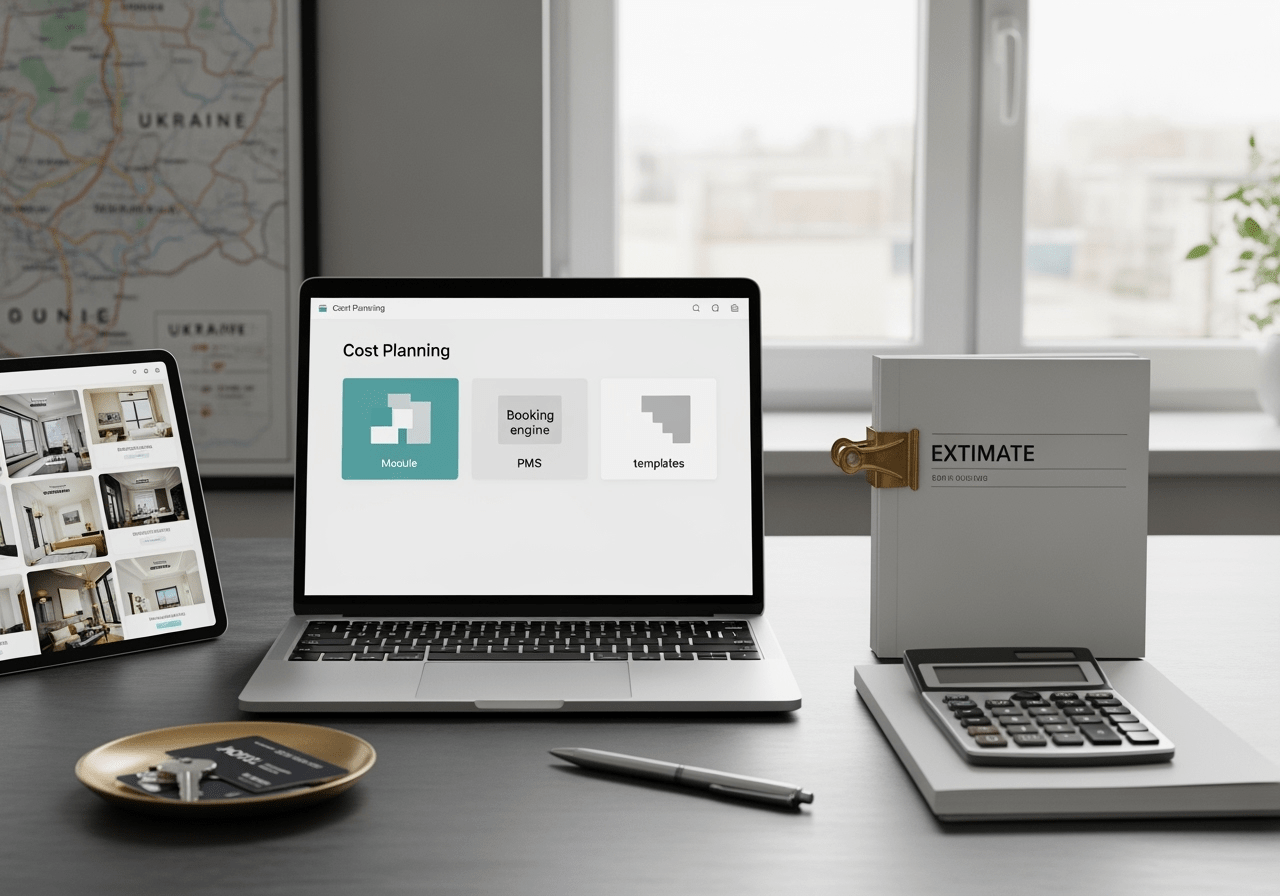

Introduction: budget clarity equals better decisions When you ask, “What is the hotel booking website development cost?” you’re really asking two things: what will I pay, and what will I get back in direct bookings and control over the guest experience. Costs vary widely based on engine integration depth, performance standards, content and photography scope, accessibility and compliance needs, and whether you’re single‑property or multi‑property. The smartest approach is not to chase the lowest initial price; it is to invest exactly where friction removal will increase conversions and lifetime value. Below is a clear, practical breakdown of the components that set cost and the choices that most reliably produce ROI.
What you’re actually buying when you pay for development Concise answer: you’re paying for speed, clarity, and a checkout that reduces abandonment—not just pretty pages.
- Architecture and UX: the site’s information structure, decision‑first layouts, and patterns for rooms, offers, experiences, location, policies, and booking flows.
- Integration and engineering: the depth of your booking engine integration, the responsiveness of calendars and rate display, cart behaviors, wallets, and resilience under network variability.
- Performance work: Core Web Vitals in the field on mid‑range phones; image pipelines; script budgets; CDN and caching tuned to traveler geographies and seasonal spikes.
- Content and photography: room specifics, honest visuals, policy clarity, and local guides that drive qualified intent and internal link authority.
- Analytics and CRO: event instrumentation, dashboards everyone can read, and a testing cadence focused on your biggest funnel leaks.
- Governance and reliability: role permissions, CI/CD, security posture, backups, and QA so improvements stick and regressions don’t ship.
The main cost drivers and how to calibrate them Concise answer: four levers push cost up or down—engine integration depth, UX complexity, content/imagery scope, and quality assurance rigor.
- Booking engine integration depth
- Embed/redirect: lowest initial cost, weakest UX and analytics, slower calendars, limited control over fees visibility. Suitable only as a short bridge.
- Light API: moderate cost, native‑feeling calendars, preloaded availability windows, fast rate rendering, and step‑level analytics for searches and drop‑offs.
- Deep API: highest cost, full control of calendar/compare/cart UI, packages/upsells/loyalty, wallet payments, and robust error states. Best conversion control; strongest data fidelity.
- UX complexity
- Straightforward single‑property: standard room taxonomy, simple add‑ons, clear policies. Lower complexity, easier to maintain.
- Distinctive brand or upsell logic: bespoke components for comparisons, packages, and post‑booking flows. Higher design and engineering effort but often higher AOV.
- Multi‑property: shared components + role‑based permissions, property switchers, and scalable navigation. Governance adds both cost and long‑term savings.
- Content and imagery scope
- Minimal: room basics and 1–2 guides; acceptable if quality is high.
- Elevated: full room specifics, consistent photography sets, itineraries for core segments, seasonal guides, and updated menus/amenities. Better for SEO and decision confidence.
- QA and compliance
- Performance QA: real‑device testing, speed budgets, and regression gates.
- Accessibility: WCAG‑oriented structure, focus states, alt text, form labels, and accessible room booking clarity.
- Security and reliability: dependency audits, WAF, backups, error logging, and uptime. Essential for operations and brand trust.
Indicative budget ranges and what they typically include Concise answer: use these as planning signals, not quotes—your mix of integration, UX, content, and QA sets the final number.
- Template or hybrid build for a single property (lower range)
- Typical scope: decision‑first IA, tuned template, image pipeline, basic copy edit, light engine integration or embedded flow with speed optimizations, base analytics.
- Good for: fast time‑to‑market, limited budget, and teams ready to iterate after launch.
- Custom single‑property build (mid range)
- Typical scope: bespoke components for room comparison and cart, light or deep API integration for availability/rates, wallet payments, robust performance budgets, honest photography set, itineraries and seasonal guides, event instrumentation, QA for accessibility and speed.
- Good for: distinctive brands, measurable conversion targets, and teams who want native-feeling booking UI.
- Multi‑property or enterprise (upper range)
- Typical scope: scalable component library, property switchers, role/permission models, deep integration, i18n readiness, SSO/loyalty hooks, performance and reliability SLAs, comprehensive QA and governance.
- Good for: groups that need consistency, control, and operational discipline at scale.
Where spending more usually pays off (and where it doesn’t) Concise answer: invest in levers that directly reduce abandonment or increase perceived value—avoid “wow” that doesn’t help decisions.
- Worth it
- Deepening engine integration for native calendars, transparent fees, and cart clarity
- Wallet payments and saved progress for mobile checkout
- Honest, consistent photography with clear room specifics
- Real‑device performance engineering and QA
- Analytics you can act on and a quarterly CRO cadence
- Not worth it
- Heavy animations or parallax that raise CPU and CLS without clarifying value
- One‑off bespoke modules that editors can’t maintain
- Longform blog filler that doesn’t map to traveler intent or internal links
How content scope shifts both cost and results Concise answer: clarity beats volume—be specific where decisions happen and useful where intent starts.
- Room pages: size, bed type, view, occupancy, amenities, accessibility, included perks, and transparent upgrade paths; 6–10 photos per room with consistent order.
- Offers and packages: limited, clear options that match seasons and segments; link back to eligible rooms and keep price math transparent.
- Local guides: landmark and event pages that support bottom‑funnel SEO, include timing and logistics, and link directly to rooms and offers.
- Policy pages and cart summaries: human‑readable rules surfaced before payment to reduce drop‑offs and disputes.
Performance budgets and the cost of going fast Concise answer: speed requires discipline across images, scripts, and hosting; the cost is modest compared to its conversion impact.
- Image pipeline: AVIF/WebP conversion, responsive srcset, hero caps, lazy load; implement once, benefit forever.
- Script budgets: smaller bundles, deferral of non‑critical code, elimination of unused libraries; saves maintenance and improves uptime under load.
- Hosting/CDN: choose a provider with global POPs, cache tuning, and observability; pre‑warm caches before big events.
Payment trust, fraud controls, and their impact on cost Concise answer: trust at payment is the last gate; spend here to avoid costly abandonment and false declines.
- UI and copy: concise totals, taxes, fees, and policy summary next to the pay button; real brand/card marks; calm visual design.
- Error handling: clear guidance that preserves validated fields and offers easy wallet fallback.
- Processor features: 3DS where required, soft‑decline retries, and routing options; small engineering lift, strong ROI.
Upsells, loyalty, and post‑booking: revenue without friction Concise answer: place add‑ons and membership offers where they won’t derail conversion.
- Pre‑payment: one or two high‑fit upsells like breakfast, parking, or late checkout with one‑tap decline.
- Confirmation: optional add‑ons (transfer, spa, dining) with transparent pricing; self‑serve manage booking to reduce support.
- Loyalty: post‑confirmation one‑tap join or magic‑link; no forced accounts during checkout.
Accessibility, legal, and reputational risk Concise answer: accessibility is both an ethical and economic choice; it’s also cheaper than remediation after complaints.
- Practical steps: semantic HTML, labels, focus states, contrast, alt text; accessible room booking clarity; captions for videos.
- Benefit: larger addressable market, fewer complaints, better overall UX.
Internationalization and currency clarity Concise answer: if you serve global travelers, make the experience native to them.
- Language and routing: hreflang, locale paths, and translation workflows that don’t break layouts.
- Currency and units: explicit currency labels, toggles when appropriate, and alignment between on‑page and checkout totals.
Analytics and measurement model Concise answer: instrument before launch and review weekly; act monthly.
- Events that matter: availability searches, room detail views, add‑to‑cart, step‑level drop‑offs, bookings, and error types.
- Dashboard: a single board marketing, revenue, and ops read together; no vanity metrics.
- Testing cadence: one meaningful A/B each month on highest‑impact pages or steps.
Reducing total cost of ownership without sacrificing results Concise answer: pick an approach that speeds publishing and enforces guardrails.
- Component library: reusable blocks for hero, features, proof, galleries, pricing, itineraries, and policy summaries.
- Editor guidance: short how‑to videos and checklists for headings, images, and meta.
- Roadmap rhythm: monthly performance checks, quarterly content refresh, continuous CRO.
When global teams can stretch your budget Concise answer: talent markets with strong hospitality UX and integration depth can improve cost‑to‑value—vet for outcomes.
- Markets to explore: hotel website development in Ukraine and broader Eastern Europe is well regarded for elegant UX and robust engine integrations at accessible rates.
- Vetting approach: demand live hospitality references, a real‑device booking demo over 4G, before/after speed and conversion metrics, and clear ownership of speed budgets and QA.
How to scope your project without blowing the budget Concise answer: define the smallest set of changes that remove the most friction.
- Scope foundation: native‑feeling calendar, transparent fees, wallet payments, room compare clarity, honest photography, and mobile performance targets.
- Phased delivery: launch with the fundamentals, then add packages, itineraries, and loyalty hooks in later iterations.
- Success definition: higher availability searches and room views, lower step‑level drop‑offs, and increased direct bookings within one quarter.
Conclusion: the cost that matters is the cost per additional direct booking The real measure of hotel booking website development cost is not only the invoice total; it is the reduction in abandonment and the increase in direct, profitable reservations. Spend where guests feel friction: speed, clarity, fee transparency, and payment ease. Choose an integration depth that lets you control the moments that matter. Enforce performance and accessibility at the engineering level so wins persist. With this discipline, every dollar you invest returns as a better guest experience and a healthier mix of direct bookings.


