
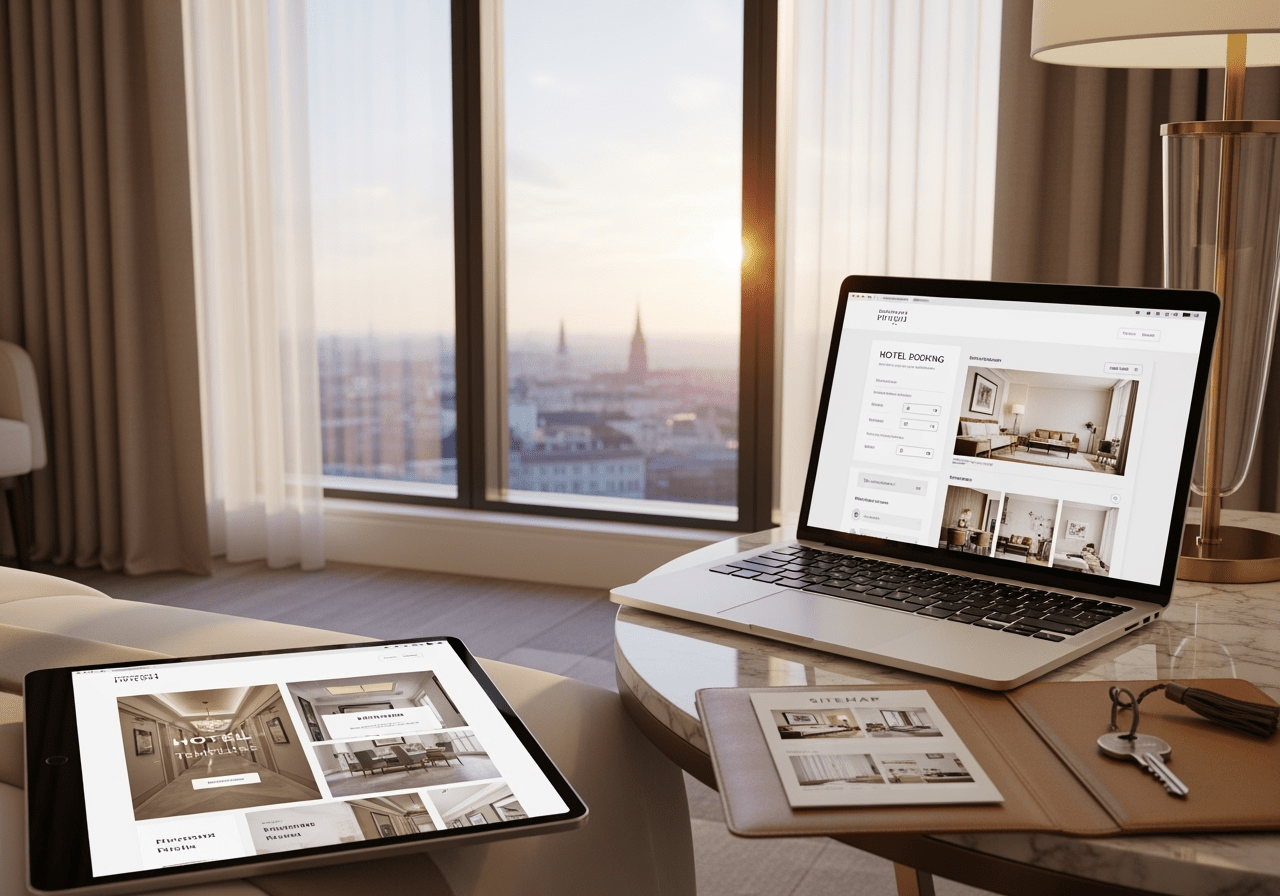

If your property’s site looks polished but direct bookings lag, the issue is usually friction—unclear value, slow pages, or a clunky checkout. The right hotel web design company focuses on three levers: speed, clarity, and a seamless booking flow. Get those right and you’ll turn more lookers into guests while protecting margin from OTAs.
Design for decisions, not decoration Guests decide in seconds—especially on mobile. Your pages should answer three questions immediately: where are you, why stay here, and how do I book?
- Above the fold: one compelling, truthful photo, a plain‑language value statement (location, vibe, key amenities), and a single “Check Availability” CTA
- Core sections: room types with honest photography, must‑know amenities, neighborhood highlights, and proof (ratings, recent reviews, awards)
- Persistent action: a sticky “Book Now” or “Check Dates” button—always visible on mobile
Booking flow that removes friction Abandonment rises with each unnecessary field and confusing step. Experienced hotel website developers obsess over:
- Fast, thumb‑friendly calendars with real‑time pricing and availability
- Simple room comparison (photos, features, occupancy, price)
- Transparent fees and policies before checkout—no surprises at the last step
- Minimal forms, wallet payments, and saved progress on mobile
- Easy edits to dates/guests/room without restarting
Performance is a feature Speed communicates competence. Your hotel web design company should deliver:
- Sub‑2.5s LCP on home, room, and booking pages
- Modern image formats, responsive sizes, and smart lazy loading
- Lean JS, deferred non‑critical scripts, and tuned caching/CDN
- Accessibility by default: readable type, strong contrast, keyboard navigation
Content that sells the stay (without fluff) Luxury hotel website design isn’t only about glossy visuals. It’s precise information that answers real questions.
- Rooms: square footage, bed type, view, standout amenities—shown honestly
- Experiences: on‑property perks (spa, dining) and local must‑dos with maps
- Itineraries: “48 Hours in [City]” to help guests picture themselves there
- Policies: kids/pets, parking, deposits, and cancellations—clear and easy to find
SEO that beats OTAs where it counts Direct bookings depend on visibility for intent‑rich searches and on-page clarity once visitors land.
- Pages targeting “hotel near [landmark]” and “boutique hotel in [city]”
- Event/seasonal pages and local guides that link back to rooms and offers
- Titles and meta descriptions that earn clicks without clickbait
- Schema (Hotel, FAQ), clean URLs, breadcrumbs, and internal links to money pages
Template vs. custom: choose the right approach
- Hotel website templates: fastest to market and budget‑friendly; pair with excellent photography and strong copy
- Custom builds: ideal for distinctive brands, complex offers/upsells, multi‑property logic, and high performance needs A trustworthy partner will outline trade‑offs, provide a phased roadmap, and tie choices to revenue impact.
Understand hotel booking website development cost Budgets vary with scope and integration depth:
- Engine integration: simple embed/redirect (lowest cost) vs. deep API for real‑time rates and packages (highest UX and cost)
- UX complexity: bespoke components (room cards, comparison tables) vs. theme variations
- Content/imagery: updated photography and clear copy move conversion more than most animations
Quality safeguards to demand
- Real‑device testing on mid‑range phones over 4G
- Accessibility checks (contrast, focus states, semantics)
- Analytics wired pre‑launch: availability searches, add‑to‑cart, step‑by‑step drop‑offs
- SEO migration plan (URL map, redirects, parity checks) if redesigning
Consider global talent to stretch budgets Hotel website development in ukraine and broader Eastern Europe is known for elegant UX and robust booking integrations at accessible rates. If you explore this option, require live hospitality references and a mobile booking demo.
What the first 90 days should deliver
- Faster room/booking pages and clearer CTAs
- Streamlined checkout with transparent pricing and fewer fields
- On‑page SEO upgrades (titles, metas, internal links) to priority pages
- Seasonal content plan (events, guides, offers) tied to rooms and suites
- A dashboard tracking searches, room views, add‑to‑cart, drop‑offs, and bookings
If your site looks good but isn’t filling rooms, let’s fix the friction. Share your URL, booking engine, and top markets. I’ll reply with a short, prioritized checklist—no fluff—showing direct‑booking wins you can implement in the next 30 days.


