
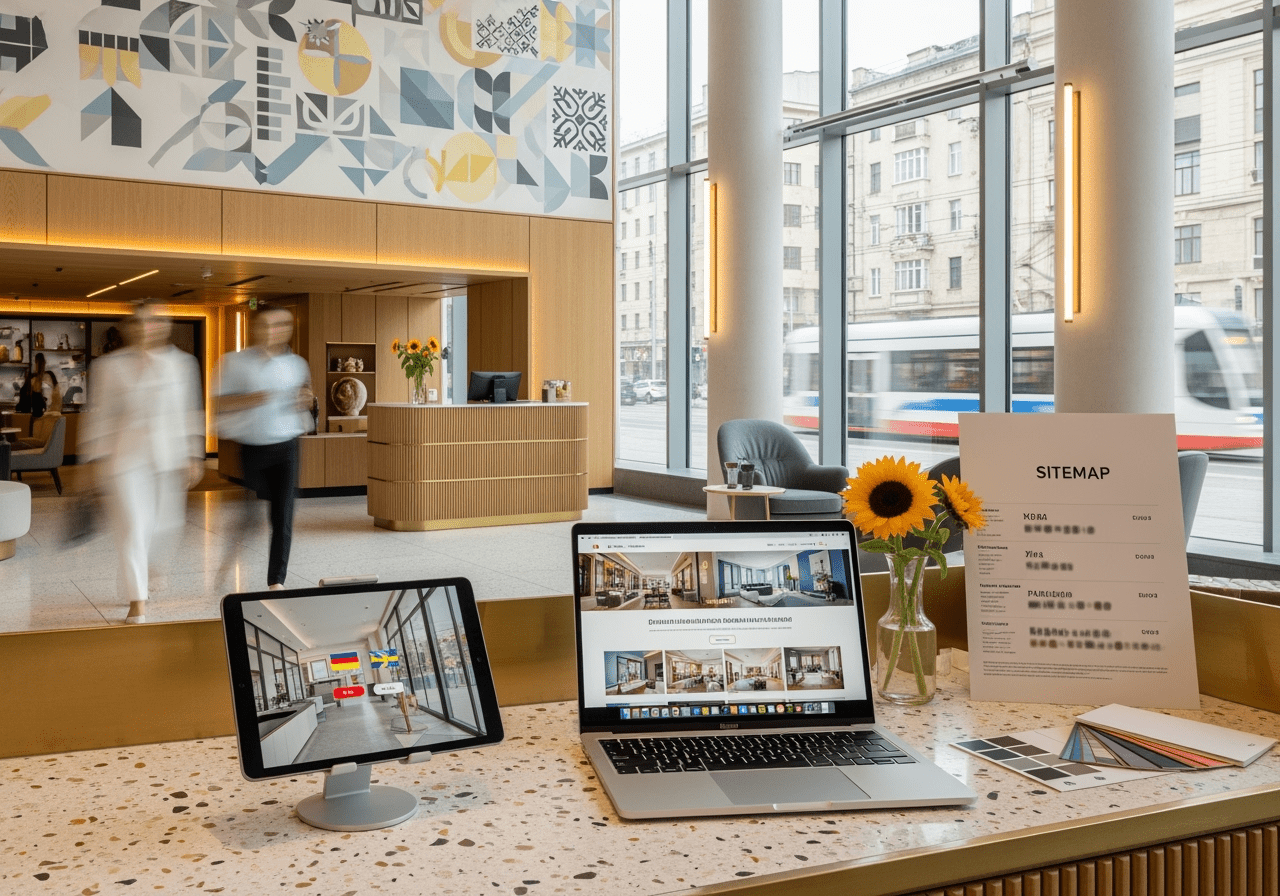

If you’re exploring hotel website development in Ukraine, you’re likely looking for a partner who can deliver elegant UX, fast performance, and frictionless booking at a sensible cost. The strongest Ukrainian teams combine hospitality know‑how with clean engineering—helping hotels capture more direct bookings and depend less on OTAs.
What great Ukrainian hotel teams focus on
- Speed on mobile: Guests research on phones. Expect sub‑2.5s LCP on key pages, compressed images, and lean scripts.
- Booking clarity: A sticky “Check Availability” CTA, readable calendars, and transparent pricing—no surprises at checkout.
- Honest visuals: Real photography that sells the stay without overselling it.
- Editor experience: A CMS your staff can use to update offers and pages without opening a dev ticket.
Design for decisions, not decoration A credible hotel web design company structures pages around how guests choose:
- Above the fold: a strong photo, where you are, why stay here, and one clear CTA.
- Rooms: truthful photography, bed type, size, view, and standout amenities.
- Proof: recent reviews, ratings, and awards near decision points.
- Local: neighborhood highlights and quick “things to do,” linked to rooms/offers.
Booking flow that reduces drop‑offs Experienced hotel website developers obsess over conversion details:
- Fast, thumb‑friendly date pickers with real‑time pricing
- Simple room comparison (photos, features, occupancy, price)
- Transparent fees and policies before checkout
- Minimal fields, wallet payments, and saved progress on mobile
- Easy edits without restarting the flow
Choosing template vs. custom (and why it matters)
- Hotel website templates: Great for single properties needing speed to market and lower upfront cost. Pair with strong copy and updated photos.
- Custom builds: Best for unique brands, complex offers and upsells, multi‑property logic, or performance at scale. A trustworthy partner will walk you through trade‑offs and propose a roadmap: launch lean, then iterate in 90‑day cycles.
How Ukrainian teams keep costs sensible without cutting corners Hotel booking website development cost usually tracks to engine depth, UX complexity, and content scope. Many Ukrainian studios keep budgets tight by:
- Starting with a reusable component system (hero, room cards, proof modules)
- Integrating booking engines via proven patterns to avoid surprises
- Compressing images and standardizing media to protect speed
- Documenting content patterns so your team can publish quickly
SEO that helps you outrun OTAs Direct bookings depend on discoverability and clarity:
- Pages for “hotel near [landmark]” and “boutique hotel in [city]”
- Local guides and event pages that link back to rooms and offers
- Titles and meta descriptions that earn clicks without clickbait
- Helpful schema (Hotel, FAQ), clean URLs, and breadcrumbs
- Internal links that send authority to rooms and booking pages
Quality safeguards you should expect
- Real-device testing for mobile UX
- Accessibility basics (contrast, focus states, semantic HTML)
- Analytics wired before launch: availability searches, add‑to‑cart, drop‑offs
- SEO migration plan if you’re redesigning (redirects, parity checks)
What a strong first 90 days looks like
- Faster homepage and room pages with clearer CTAs
- Streamlined booking steps and transparent pricing on mobile
- On‑page SEO updates (titles, metas, internal links) to priority pages
- A seasonal content plan (events, offers, guides) tied to rooms
- A dashboard tracking searches, bookings, and funnel drop‑offs
How to vet a partner for hotel website development in Ukraine
- Ask for live hospitality sites, not just screenshots
- Request a demo of the booking flow on a mid‑range phone over 4G
- Review how they measure success (events, dashboards, conversion)
- Clarify ownership: who updates content, who maintains performance, how fast fixes ship
- Align on a lean MVP and a post‑launch improvement cadence
If you want a practical scope that lifts direct bookings, share your URL, booking engine, room mix, and top markets. I’ll send a prioritized, no‑fluff plan and a phased estimate that fits your goals.


