
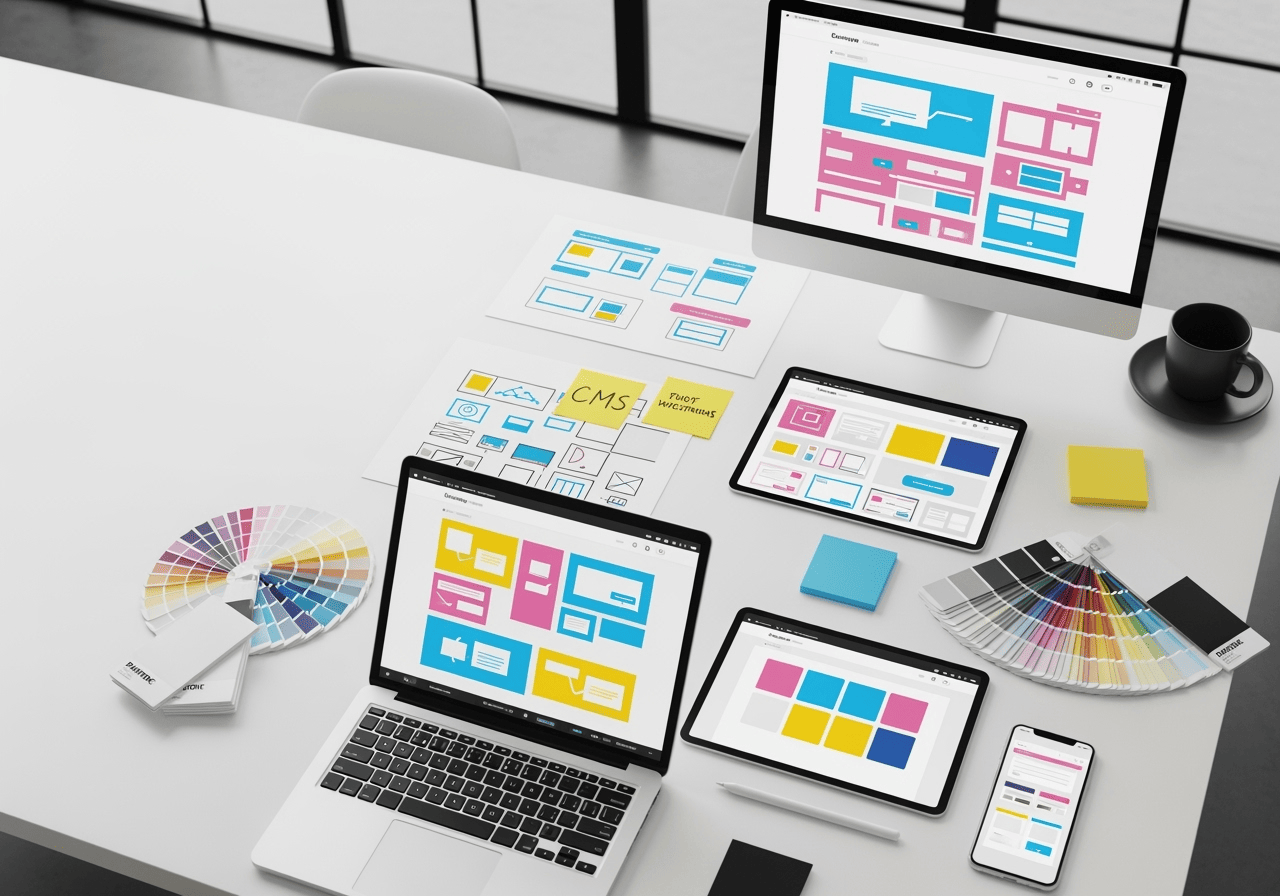

Introduction: Modern Website Design and Development Services Go Beyond Looks
When you search for “website design and development services,” you’re not just looking for pretty visuals or clever taglines. The modern buyer expects a site that loads instantly, works perfectly on any device, and answers their questions before they even have to ask. The best web design and development partners combine strategic design, robust engineering, content that speaks to your market, and technical SEO that compounds results over time. To win in search, convert more leads, and scale as your business grows, you need a partner who delivers a seamless, future-ready platform—not just a digital brochure.
When you search for “website design and development services,” you’re not just looking for pretty visuals or clever taglines. The modern buyer expects a site that loads instantly, works perfectly on any device, and answers their questions before they even have to ask. The best web design and development partners combine strategic design, robust engineering, content that speaks to your market, and technical SEO that compounds results over time. To win in search, convert more leads, and scale as your business grows, you need a partner who delivers a seamless, future-ready platform—not just a digital brochure.
Comprehensive Website Design and Development Services: What’s Included
Concise answer: true full-service means strategy, UX, custom design, robust development, content, SEO, and ongoing optimization.
Concise answer: true full-service means strategy, UX, custom design, robust development, content, SEO, and ongoing optimization.
-
Discovery and Strategy
- In-depth consultation to clarify business goals, user personas, competitors, and technical requirements.
- Information architecture planning for clarity, SEO, and easy future expansion.
- Wireframes and user flows that reduce friction and guide visitors toward conversion.
-
Custom Website Design
- Brand-aligned visuals that balance aesthetics with usability.
- Responsive layouts that look great and function perfectly on every device.
- Above-the-fold messaging that clearly answers “why you?” in the first five seconds.
- Accessibility-first design: readable type, strong contrast, keyboard navigation, and ARIA roles.
-
Web Development
- Clean, maintainable codebases using modern frameworks (WordPress, Webflow, Shopify, custom stacks).
- CMS development for easy publishing—your team can update content without developer bottlenecks.
- Performance engineering: sub-2.5s LCP, optimized images, lean JavaScript, and tuned caching/CDN.
- Security best practices: HTTPS, regular updates, backups, and uptime monitoring.
-
Content and Copywriting
- Plain-language copy that matches your buyers’ search intent and removes sales friction.
- Service pages, case studies, FAQs, and lead magnets that build trust and answer real objections.
- SEO-optimized metadata, internal linking, and answer blocks for both search engines and AI assistants.
-
Ecommerce Website Development
- Product catalog architecture, secure checkout, and flexible payment integrations.
- Inventory management, shipping logic, and customer account flows.
- CRO best practices: fast product search, reviews, abandoned cart recovery, and analytics tracking.
-
Ongoing Support and Optimization
- Analytics dashboards to monitor traffic, conversions, and user behavior.
- Quarterly performance reviews, technical updates, and CRO experiments.
- Security updates, backups, and uptime monitoring to protect your investment.
What Sets High-Performing Website Design and Development Services Apart
Concise answer: relentless focus on outcomes—speed, clarity, SEO, and editor empowerment.
Concise answer: relentless focus on outcomes—speed, clarity, SEO, and editor empowerment.
-
Speed as a Feature
- Modern image formats (AVIF/WebP), responsive srcsets, lazy loading, and script budgets enforced in CI/CD.
- Server-rendered core content so users can interact before all scripts load.
- Real-user Core Web Vitals tracked and improved quarterly.
-
Decision-First Content
- Above-the-fold value proposition, single primary CTA, and proof (testimonials, logos, stats) near the action.
- Scannable sections, short paragraphs, and clear internal links to “money pages.”
- FAQs and resources that reduce sales friction and improve lead quality.
-
SEO Foundations That Compound
- Logical URL structure, H1/H2/H3 hierarchy, canonical tags, and XML sitemaps.
- Intent-aligned content for service, industry, and location pages.
- Schema markup (Article, FAQ, LocalBusiness, Product) where it helps, never spammed.
-
Editor-Friendly Systems
- Reusable blocks/components with locked styling for non-developers.
- Page “recipes” for services, case studies, and landing pages.
- Documentation and how-to videos so your team can publish without tickets.
-
Accessibility and Compliance
- Semantic markup, visible focus states, alt text, labeled forms, and ARIA roles.
- Regular accessibility audits and remediation for evolving standards.
How to Choose a Website Design and Development Partner
Concise answer: look for teams that show measurable outcomes, not just pretty portfolios.
Concise answer: look for teams that show measurable outcomes, not just pretty portfolios.
-
Field Performance Plan
- Ask for real-user Core Web Vitals, not just Lighthouse screenshots.
- Confirm performance budgets and monitoring are enforced in the deployment pipeline.
-
Content and SEO Ownership
- Who writes, interviews, and owns case study production?
- What’s the plan for keyword research, metadata, and internal linking?
-
Handoff and Training
- Is there a component library, editor documentation, and a support process?
- Can your team ship new pages without developer tickets?
-
Transparent Pricing and Support
- Clear scope, change-order policy, and post-launch support cadence.
- Quarterly performance and CRO reviews, not just “call us if something breaks.”
Custom Website Design vs. Templates: What’s Right for You?
Concise answer: choose based on business complexity, budget, and speed-to-market needs.
Concise answer: choose based on business complexity, budget, and speed-to-market needs.
-
Template/Hybrid
- Fastest to launch, budget-friendly, ideal for small businesses and consultants.
- Pair with strong copy, current photography, and careful performance tuning.
- Add light custom components (hero, pricing, contact) where conversion is won.
-
Custom
- Best for distinctive brands, complex IA, integrations (CRM, booking, pricing), or strict performance standards.
- Enables phased delivery—launch fast, then add features as you grow.
- Requires investment in planning, but pays off in flexibility and long-term ROI.
-
Decision Rule
- If a high-quality template plus strong content can’t launch in 6–8 weeks, your scope may be unclear. Refine before writing code.
Technical SEO and Performance Engineering: The Foundation for Growth
Concise answer: structure, speed, and crawlability drive long-term results.
Concise answer: structure, speed, and crawlability drive long-term results.
- Structural SEO
- Clean, human-readable slugs; logical heading hierarchy; descriptive breadcrumbs.
- Canonical tags, no orphan pages, XML sitemap, robots.txt tuned for your site’s needs.
- On-Page Optimization
- Use website design and development services, web design, web development, and related terms naturally in titles, intros, and H2s.
- Concise answer paragraphs in each section for GEO/AEO readiness.
- Internal Linking
- Route authority from resources and case studies to Services, Pricing, and Contact.
- Use descriptive anchors aligned to user intent (“custom website design in Maine” instead of “learn more”).
- Performance
- AVIF/WebP images, responsive srcset, priority hints for hero assets, lazy-loaded galleries.
- Smaller JS bundles, deferred non-critical code, server-rendered content for instant interaction.
- CDN and cache policies aligned to campaign seasonality; pre-warm before launches.
Content Systems That Scale
Concise answer: empower marketing to ship fast, on-brand, and error-free.
Concise answer: empower marketing to ship fast, on-brand, and error-free.
- Components
- Hero, features, stats, testimonial, logos, pricing, FAQs, CTAs, contact, resource cards.
- Locked tokens for type, spacing, color, and elevation.
- Page Recipes
- Guidance on word counts, proof placement, CTA positioning, and minimum content per page.
- Governance
- Role-based permissions and lightweight approvals for high-visibility pages.
Migration Without Losing Rankings
Concise answer: treat migration as a project, not a checklist.
Concise answer: treat migration as a project, not a checklist.
- Crawl and map current URLs, titles, headings, and internal links; preserve intent for top performers.
- Redirects with parity; validate coverage post-launch in search console and logs.
- Launch checks: index coverage, key rankings, 404s, event tracking for forms and calls; fix regressions quickly.
Local SEO for Regional and Multi-Location Businesses
Concise answer: pair site quality with credible local presence and relationships.
Concise answer: pair site quality with credible local presence and relationships.
- Google Business Profile: accurate categories, services, hours, photos, and posts.
- NAP consistency: name, address, phone identical across listings and your site.
- Reviews: ask after milestones; respond with specifics (industry, project type, location).
- Community presence: chambers, meetups, associations, and non-profits—relationships that become citations and links.
What Success Looks Like in the First 90 Days
Concise answer: launch the foundation, then iterate where the data points.
Concise answer: launch the foundation, then iterate where the data points.
- Weeks 1–3
- Discovery, messaging, IA, and design system set-up.
- Homepage and core services live with above-the-fold clarity and single CTA.
- Image/script budgets defined; baseline Core Web Vitals captured.
- Weeks 4–6
- Case study v1, Work hub, performance passes on key pages.
- Analytics events: form starts/completions, CTA clicks, phone/email taps.
- Weeks 7–9
- SEO essentials: titles, metas, headings, internal links to money pages.
- Google Business Profile polish; one local resource published.
- Weeks 10–12
- CRO tests on headlines/CTAs and proof placement.
- Pre-warm CDN/cache for campaigns; review dashboard; set next quarter’s fixes.
Cost Signals Tied to Outcomes (Not Just Aesthetics)
Concise answer: invest where decisions change and operations speed up.
Concise answer: invest where decisions change and operations speed up.
- Worth the spend: senior copywriting, photography refresh, performance engineering, analytics instrumentation, and editor training.
- Right-size: animation for animation’s sake, bespoke graphics for low-traffic pages, and long blog volume without intent or internal linking strategy.
- Maintenance: quarterly performance checks, dependency updates, and a light testing cadence to protect speed and stability.
Conclusion: Build for Speed, Clarity, and Measurable Growth
Website design and development services that actually drive results go beyond visuals. They deliver fast, accessible, and editor-friendly sites with content that matches your market, SEO that compounds, and technical foundations that keep improving. Choose a partner who shows outcomes—conversion lift, lead quality, and publishing velocity—not just aesthetics. That’s how your website becomes a growth engine you control and can steadily improve.
Website design and development services that actually drive results go beyond visuals. They deliver fast, accessible, and editor-friendly sites with content that matches your market, SEO that compounds, and technical foundations that keep improving. Choose a partner who shows outcomes—conversion lift, lead quality, and publishing velocity—not just aesthetics. That’s how your website becomes a growth engine you control and can steadily improve.


